


Overview
SEO automation is revolutionizing how businesses optimize their websites, making the complex and time-consuming task of search engine optimization more efficient and effective. For beginners, it represents the use of software tools and AI-driven technologies to automate repetitive SEO tasks, allowing website owners and marketers to focus on strategy and growth.
By leveraging SEO automation, modern websites can achieve higher visibility on search engines like Google with less manual intervention. Automation encompasses various activities such as keyword tracking, on-page SEO checks, internal linking, and generating SEO-friendly reports to monitor performance.
This guide will walk you through the essentials of SEO automation, explaining what it means for today’s websites, which tasks you can confidently automate without losing control, and how to set up effective automated systems for on-page SEO and internal linking. You will also learn how to measure results through rank tracking and detailed SEO reporting, ensuring you stay informed and agile in your SEO efforts.
“SEO automation transforms your website into a self-improving machine, continuously optimizing to boost rankings and attract organic traffic.”

What SEO Automation Means for Modern Websites
In the fast-paced digital landscape, SEO automation has become an indispensable asset for modern websites. It streamlines the optimization process by using AI and machine learning algorithms to analyze site data, identify issues, and implement improvements automatically.
Modern websites benefit greatly from automation because it ensures consistency and scalability. Instead of manually auditing and optimizing hundreds or thousands of pages, automation tools continuously scan for SEO errors, generate optimized meta tags, and recommend content improvements instantly. This leads to faster response times to SEO changes and algorithm updates.
Moreover, automation minimizes human error and frees up valuable resources, enabling teams to focus on creative tasks like crafting compelling content or building backlinks. It integrates seamlessly with various CMS platforms, making it accessible regardless of technical expertise.
“Automating SEO tasks allows websites to stay competitive by adapting quickly and efficiently to ever-changing search engine algorithms.”
Tasks You Can Automate Without Losing Control
While automation can handle many aspects of SEO, it’s crucial to maintain control over strategic decisions. Here are key SEO tasks that can be safely automated:
- On-page SEO audits: Automatically scan your pages to detect missing titles, meta descriptions, or schema markup.
- Content optimization suggestions: Receive AI-driven recommendations for improving headings, image alt texts, and content quality.
- Internal linking: Automatically generate internal links to enhance crawlability and user navigation.
- Rank tracking: Continuously monitor keyword rankings across different locations and devices.
- SEO reporting: Generate detailed, automated reports to track progress and identify opportunities.
Automating these tasks keeps your SEO efforts consistent and efficient, while still allowing you to review recommendations and make informed decisions. This balance ensures you never lose control over your website’s SEO strategy.
“Automation amplifies your SEO capabilities without replacing the critical human insight required for strategic success.”
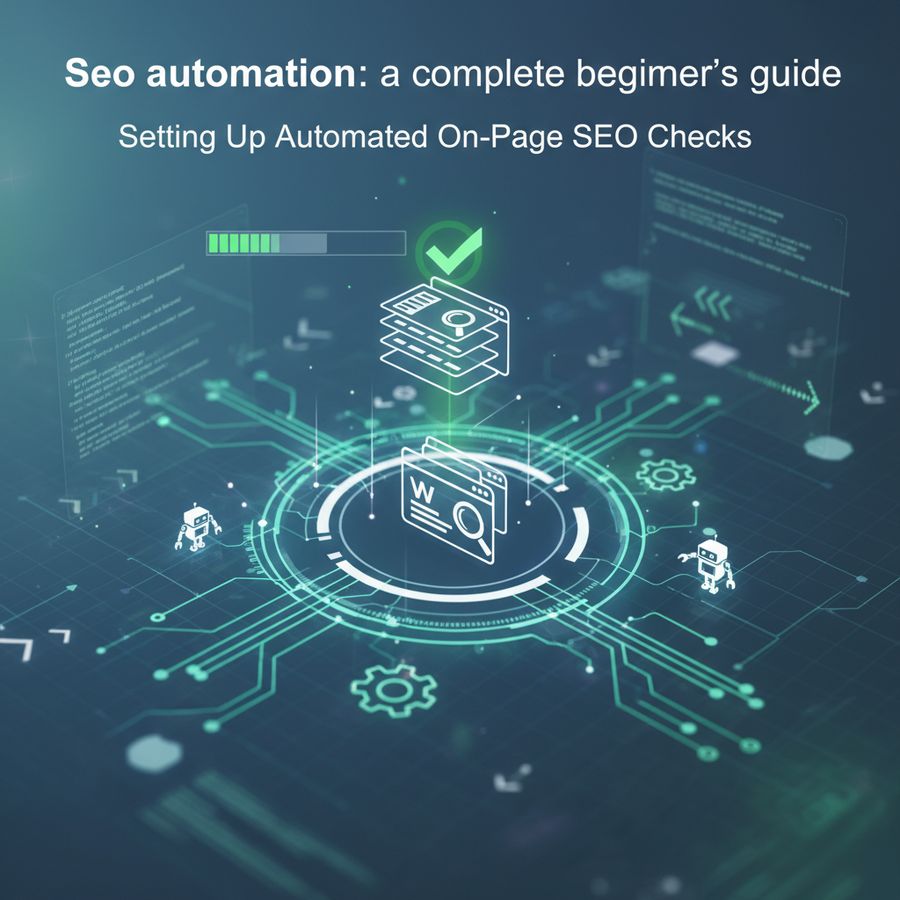
Setting Up Automated On-Page SEO Checks
Setting up automated on-page SEO checks is a foundational step towards effective SEO automation. These checks involve scanning your website for essential SEO elements and identifying areas that need improvement.
To implement automated on-page SEO checks, start by integrating an AI-powered tool that can:
- Detect missing or duplicate meta titles and descriptions.
- Analyze H1 tags for proper usage and hierarchy.
- Check image alt attributes for accessibility and SEO value.
- Identify thin content and suggest content enrichment.
- Verify schema markup presence and accuracy.
Once configured, these checks run regularly to provide prioritized recommendations. Many platforms enable one-click approval and automatic application of fixes, reducing manual work. This setup ensures your pages remain optimized and aligned with best SEO practices continuously.
“Automated on-page SEO checks provide timely insights that keep your website optimized and search engine-friendly around the clock.”
Automating Internal Linking for Better Crawlability
Internal linking plays a critical role in SEO by helping search engines crawl and index your website more effectively, while also enhancing user experience. Automating internal linking can significantly improve site structure without overwhelming manual effort.
Automation tools analyze your website’s content and keywords to:
- Identify relevant pages that should be linked together.
- Generate internal links based on keyword relevance and page authority.
- Maintain a balanced link distribution to avoid over-optimization.
- Automatically update links as content changes or new pages are added.
This ensures that crawl bots discover and rank your pages efficiently, while users benefit from intuitive navigation paths. Automated internal linking also supports SEO goals by distributing link equity across important pages, boosting their visibility.
“Automated internal linking transforms your website into a well-connected network, maximizing crawlability and enhancing SEO performance.”
Measuring Results with Rank Tracking and Reports
To understand the effectiveness of your SEO automation efforts, continuous measurement through rank tracking and comprehensive SEO reporting is essential. These tools monitor keyword positions, organic traffic trends, and overall site health.
Automated rank tracking tools provide:
- Daily or weekly updates on keyword rankings across search engines and geographies.
- Insights into ranking fluctuations to quickly react to algorithm changes.
- Performance comparisons against competitors.
Meanwhile, automated SEO reports consolidate data from audits, traffic analytics, and rank tracking into clear, actionable summaries. They help identify successful strategies and areas needing attention, keeping stakeholders informed without manual data crunching.
“Data-driven insights from automated rank tracking and reporting empower smarter SEO decisions and sustained growth.”
Conclusion
SEO automation is no longer a futuristic concept but a practical necessity for modern websites seeking to maximize efficiency and search visibility. By automating routine tasks such as on-page SEO checks, internal linking, and rank tracking, businesses can save time, reduce errors, and sustain continuous improvement.
However, successful SEO automation requires a strategic approach that balances automation with human oversight. Leveraging AI-powered tools like Boostifai enables even beginners to implement advanced SEO tactics effortlessly, ensuring their websites remain optimized and competitive.
Embracing SEO automation means transforming your website into a self-improving asset—always working to rank higher, attract more organic traffic, and deliver better user experiences without the constant manual workload.
“Integrate automation wisely, and your SEO will evolve from a static process into a dynamic, growth-driving force.”