



Overview
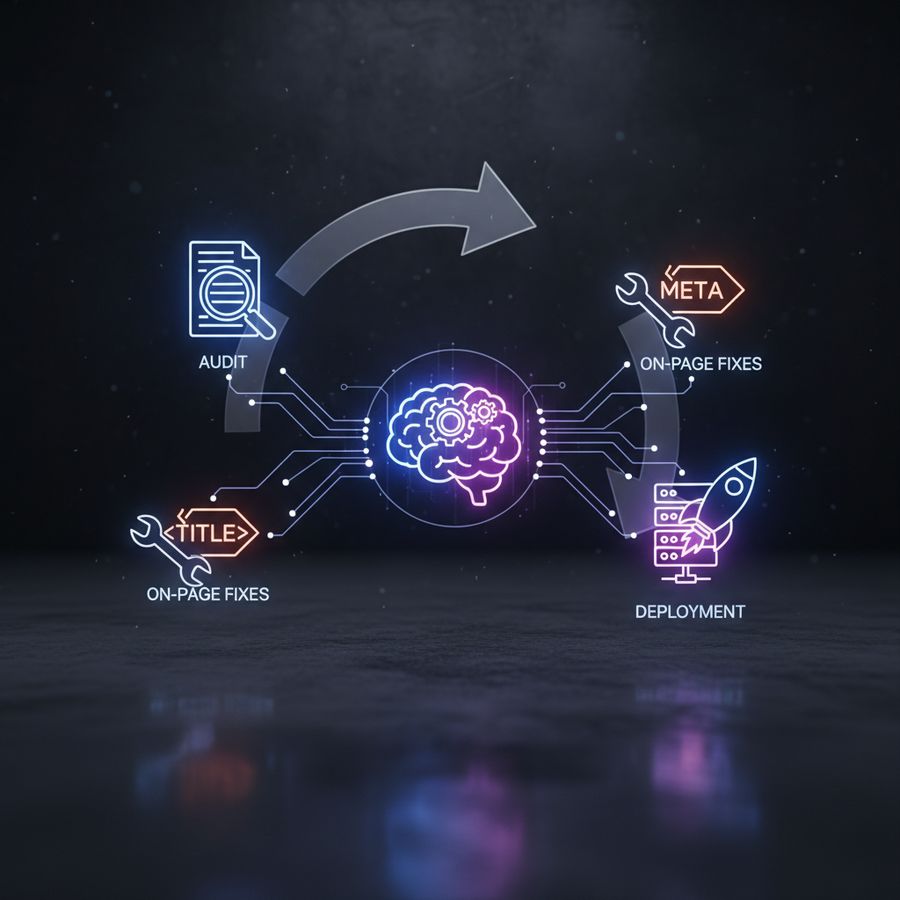
SEO automation workflow is revolutionizing how businesses manage their digital presence by streamlining complex SEO processes from audit to deployment. This approach harnesses advanced AI-powered tools to reduce manual effort, increase efficiency, and improve search engine rankings consistently. Instead of relying solely on traditional, time-consuming SEO strategies, automation enables continuous optimization with minimal human intervention.
The workflow typically begins with an automated SEO audit that scans your website comprehensively to identify issues such as missing meta tags, broken links, slow-loading pages, and other technical SEO problems. Following this, targeted tasks are prioritized and mapped for automation to ensure the most impactful optimizations are applied without delay.
With AI-driven insights, on-page elements like titles, meta descriptions, and internal links can be dynamically optimized, boosting organic traffic and enhancing user experience. Furthermore, scheduling automated reports provides stakeholders with real-time performance analytics, enabling data-driven decisions.
“Implementing an effective SEO automation workflow transforms your website into a self-improving machine, optimizing visibility and rankings 24/7 without constant manual oversight.”
By integrating these steps into a cohesive workflow, businesses save time, reduce errors, and maintain their competitive edge in search engine results. This article will guide you through the essential phases of an SEO automation workflow, including mapping tasks for automation, setting up site crawls and alerts, automating on-page fixes, internal linking, and performance reporting.

Map SEO Tasks for Automation Opportunities
Identifying which SEO tasks can be automated is crucial to building an efficient SEO automation workflow. Not all SEO activities are equally suited for automation; some require human creativity and strategic thinking, while others are repetitive and rule-based, making them perfect candidates for automation.
Start by conducting a thorough inventory of your current SEO activities. Look for tasks that are:
- Repetitive: Regularly recurring tasks like meta tag updates or broken link fixes.
- Rule-based: Activities governed by clear guidelines, such as adding alt text to images or optimizing header tags.
- Data-driven: Tasks that rely heavily on analytics, like monitoring keyword rankings or traffic changes.
Once these tasks are identified, prioritize them based on impact and feasibility. High-impact tasks that consume significant time and have clear automation protocols should be your primary focus.
Mapping tasks also involves understanding dependencies between SEO elements. For example, fixing page titles may need to precede internal linking updates to maintain consistency. This logical sequencing ensures that automation doesn’t introduce errors and maintains SEO integrity.
Automation opportunities can include keyword tracking, content audits, technical SEO checks, and even generating SEO-friendly content drafts. By systematically mapping these tasks, you create a blueprint for an efficient workflow that leverages technology to optimize your SEO efforts continuously.
Set Up Automated Site Crawls and Alerts
Automated site crawls are the backbone of any effective SEO automation workflow. They continuously scan your website to detect SEO issues such as broken links, duplicate content, missing meta tags, or slow page speeds.
Setting up these crawls involves configuring an SEO crawler tool to regularly scan your website’s pages and report on the health of essential SEO elements. You can schedule crawls to run daily, weekly, or monthly depending on your site’s size and update frequency.
SEO alerts complement crawls by notifying you immediately when critical issues arise. For instance, if a key page becomes unreachable or meta descriptions are missing on newly added pages, automated alerts ensure prompt action.
“Timely alerts from automated crawls empower SEO teams to act swiftly, preventing ranking drops and maintaining site health proactively.”
When configuring alerts, it’s essential to set thresholds that avoid notification fatigue. Focus on high-priority issues first, such as server errors or major content problems, while less critical warnings can be aggregated in periodic reports.
Integrating automated crawls and alerts into your workflow ensures your website’s SEO health is constantly monitored, enabling you to maintain optimal performance with minimal manual oversight.
Automate On-Page Fixes for Titles and Meta
On-page SEO automation plays a vital role in enhancing your website’s relevance and click-through rates by optimizing titles and meta descriptions. Automating these fixes saves considerable time and ensures consistency across all pages.
This process involves setting rules and templates for generating SEO-friendly titles and meta tags based on page content, keywords, and user intent. For example, an automation system can detect missing or duplicate titles and create optimized replacements that incorporate target keywords naturally.
Automation tools can also adjust meta descriptions to be concise, compelling, and informative, improving visibility in search results. By analyzing page content and keyword relevance, these systems tailor meta tags to maximize engagement.
- Detect and fix missing titles and meta descriptions automatically.
- Ensure uniqueness and keyword optimization across all pages.
- Update tags dynamically as content changes.
Implementing on-page SEO automation reduces manual errors and accelerates your site’s optimization cycles. It also frees SEO teams to focus on strategic initiatives like content creation and backlink building.
By automating these routine yet critical tasks, your website stays fresh and competitive in search rankings without constant manual intervention.
Build Rules for Internal Link Automation
Internal linking automation is a powerful technique to improve site architecture, distribute page authority, and enhance user navigation—all key factors for SEO success.
Building rules for automating internal links involves defining criteria such as keyword triggers, page hierarchies, and link placement priorities. Automation systems can scan your content and insert relevant internal links that help search engines crawl your site more effectively.
Effective internal linking automation considers:
- Anchor text relevance: Links use descriptive keywords to improve contextual signaling.
- Link depth and hierarchy: Prioritize linking to important pages and avoid over-linking.
- Dynamic updates: Links adjust automatically as new content is added or existing pages change.
“Automated internal linking enhances site authority flow and user experience, boosting SEO performance without tedious manual linking.”
By implementing internal linking automation, websites ensure a coherent and effective link structure that supports SEO goals continuously. This reduces the risk of orphan pages and improves the discoverability of key content.
Schedule Automated Reporting for SEO Performance
SEO reporting automation streamlines the delivery of critical performance insights to stakeholders, enabling timely decisions and ongoing optimization.
Automated reports typically include metrics such as keyword rankings, organic traffic trends, backlink profiles, and technical SEO status. Scheduling these reports at regular intervals—daily, weekly, or monthly—ensures continuous visibility into SEO progress.
Benefits of automated SEO reporting include:
- Consistent monitoring: Keeps SEO teams and clients informed without manual data gathering.
- Customizable insights: Tailor reports to focus on KPIs relevant to your business goals.
- Time savings: Eliminates repetitive tasks, freeing up resources for strategic work.
Integrating automated reporting in your workflow also supports transparency and accountability. Stakeholders receive actionable insights that highlight successes and areas needing attention.
By leveraging SEO reporting automation, businesses can maintain an agile approach to SEO, quickly adapting to changes and maximizing their digital marketing ROI.
Conclusion
Implementing a comprehensive SEO automation workflow—from audit to deployment—empowers businesses to optimize their websites efficiently and effectively. By mapping SEO tasks for automation, setting up automated site crawls and alerts, automating on-page fixes, internal linking, and scheduling performance reporting, organizations can maintain a competitive edge in search rankings while minimizing manual effort.
SEO automation not only accelerates routine processes but also enhances accuracy and consistency, leading to better visibility and increased organic traffic. Leveraging AI-driven tools and smart automation strategies transforms SEO from a time-intensive task into a streamlined, ongoing process that works around the clock.
“The future of SEO lies in intelligent automation—allowing your site to adapt, improve, and rank higher with minimal manual intervention.”
Businesses that embrace SEO automation workflows will benefit from improved efficiency, cost savings, and measurable SEO performance gains. Start integrating these automation strategies today to unlock the full potential of your digital presence.